
Drip Septic System Installation in North Georgia
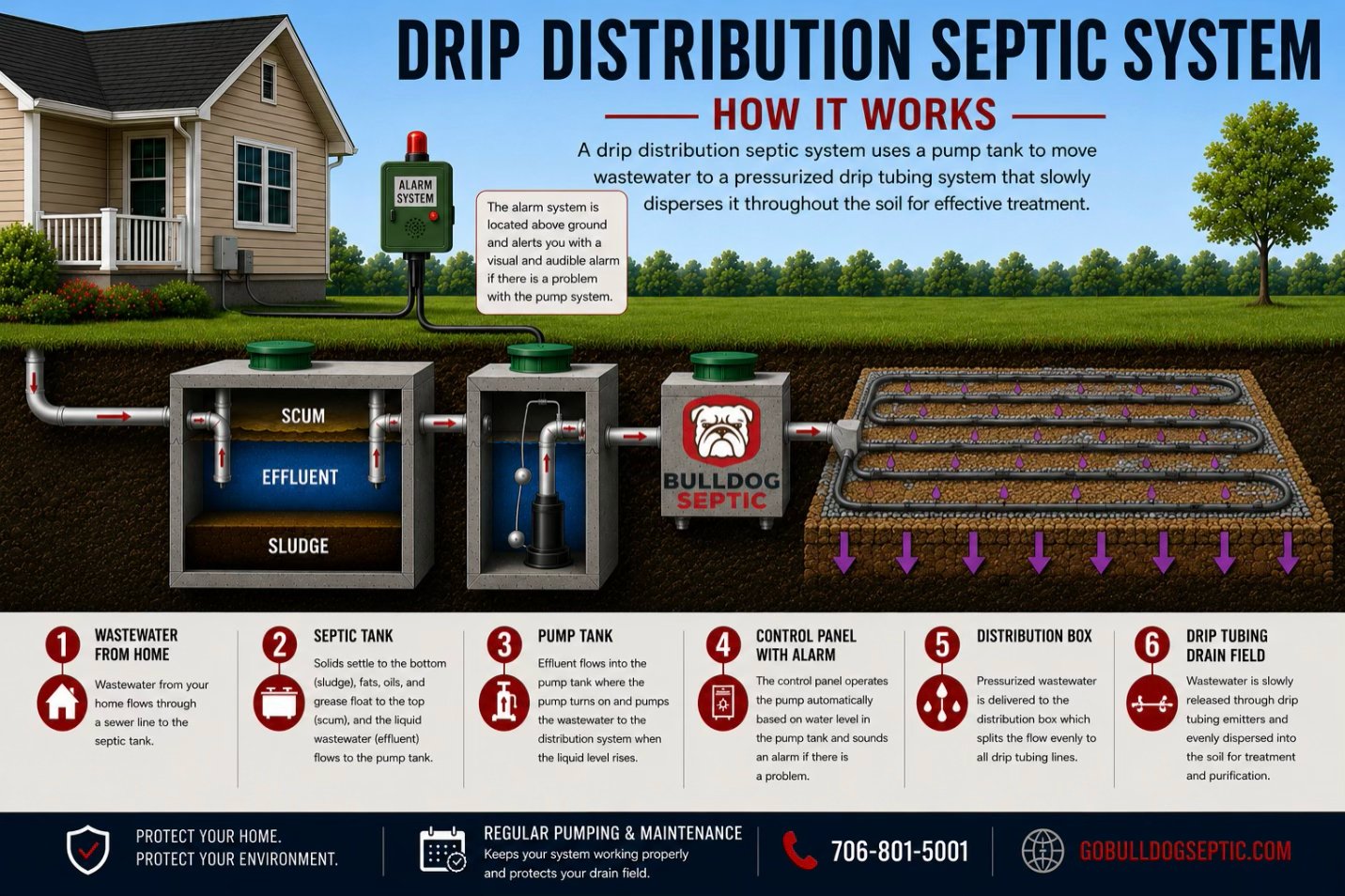
Drip septic systems are advanced engineered wastewater treatment systems designed for properties with limited soil depth, steep slopes, poor soils, or environmentally sensitive conditions.
These systems use timed dosing and specialized drip tubing to slowly distribute treated wastewater across a large soil absorption area.
Drip septic systems are commonly used throughout North Georgia when a conventional drain field is not suitable or when wastewater needs to be applied slowly and evenly across challenging soil conditions.
How Drip Septic Systems Work
In a drip septic system, wastewater is treated, filtered, and then pumped through small-diameter drip tubing installed in shallow trenches or designated dispersal areas.
Instead of sending a large amount of effluent into trenches all at once, drip systems apply wastewater in small, controlled doses. This timed dosing helps the soil absorb wastewater more efficiently and reduces the risk of oversaturation.
A drip septic system may include a treatment tank, pump tank, filtration system, control panel, timed dosing controls, and drip tubing network.
Common Applications for Drip Septic Systems
Drip septic systems are commonly used for:
- Small lots
- Steep terrain
- Poor soils
- Lake properties
- Environmentally sensitive areas
- Shallow soil sites
- Properties requiring advanced treatment
- Sites with limited drain field space
- Engineered septic designs
Because drip systems can be designed around difficult terrain, they are often useful on properties where standard trenches or chambers may not be ideal.
Common Components of a Drip Septic System
Depending on the engineered design, a drip septic system may include:
- Pretreatment system
- Septic tank
- Pump tank
- Filtration system
- Automated control panel
- Timed dosing controls
- Drip tubing network
- Flush valves or return lines
- Alarm system
Each component plays an important role. Filters help protect the drip tubing from clogging, while timed controls regulate how much effluent is applied to the soil.
Benefits of Drip Septic Systems
Drip systems offer several advantages for difficult properties:
- Minimal site disturbance
- Excellent wastewater distribution
- Can work on difficult lots
- Reduced runoff risk
- Flexible installation layouts
- Highly efficient treatment process
- Good option for shallow or limited soils
- Helps reduce the chance of oversaturating the drain field
Maintenance for Drip Septic Systems
Drip systems require regular maintenance because they rely on pumps, filters, controls, and small-diameter tubing.
Maintenance may include:
- Filter cleaning
- Pump inspection
- Alarm testing
- Control panel checks
- Flushing drip lines
- Routine septic pumping
- Checking for pressure or flow issues
Routine service is critical for long-term performance. A clogged filter, pump issue, or control failure can affect the entire drip system.
Engineering & Permitting
Most drip septic systems require engineered plans and close coordination with county health departments. Proper design, layout, tubing spacing, filtration, and dosing are all important for system performance.
Bulldog Septic works with homeowners, builders, engineers, and local health departments to install drip septic systems according to approved designs.
Need a Drip Septic System Installed or Serviced?
If your property requires a drip septic system, engineered septic design, or advanced wastewater solution, Bulldog Septic can help.
We service Alpharetta, Braselton, Buford, Commerce, Cumming, Flowery Branch, Gainesville, Hoschton, Jefferson, Milton, Sugar Hill, Winder, and surrounding North Georgia communities.
Call Bulldog Septic at 706-801-5001 or visit our online contact form to request service.


Frequently Asked Drip Septic System Questions
What Is a Drip Septic System?
When Is a Drip Septic System Required?
Do Drip Septic Systems Require More Maintenance?
Can a Drip Septic System Be Installed on a Steep Lot?
Articles
-
Septic Repair or Replacement: How Pros Decide And How You Can Tell It’s Time
If you are weighing septic repair vs replacement in Braselton, GA, you are not alone. Homes in neighborhoods like Chateau Elan, Mulberry Park, and the West Jackson area rely on septic every day, and small problems can grow fast. This guide explains how professionals decide between […]
-
7 Early Signs Your Septic Tank Is Full (Before Sewage Backup Happens)
When a septic tank approaches capacity, it rarely happens all at once. Your home starts sending quiet signals first. If you live in Braselton or nearby neighborhoods like Chateau Elan or Hoschton, learning these signs helps you act early and protect your floors, walls, and yard. […]

Request Septic Services in Braselton, GA Today