
Cluster / Community Septic Systems in North Georgia
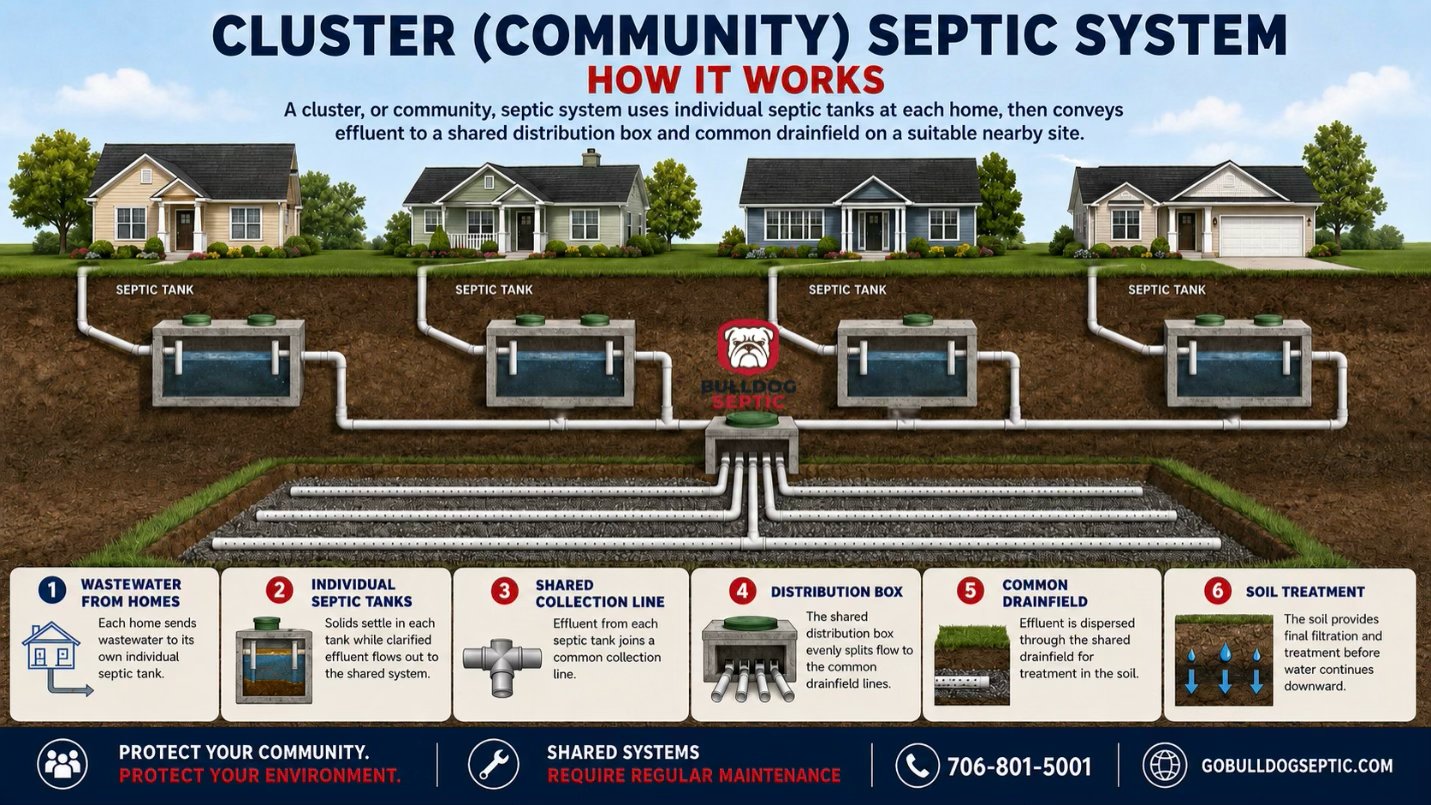
A cluster septic system, also called a community septic system or decentralized wastewater treatment system, is designed to serve two or more homes, buildings, or lots using a shared wastewater treatment and dispersal area.
Cluster systems are commonly found in rural subdivisions, small developments, family compounds, private roads, and properties where individual drain fields may not be practical for every lot.
How a Cluster Septic System Works
In many cluster systems, each home has its own septic tank. Wastewater from each home flows into its individual tank, where solids settle and liquid effluent exits the tank.
The effluent from multiple tanks then flows into a shared collection line, reaches a shared distribution box, and is dispersed into a common drain field located on a suitable nearby site.
By using a centralized drain field location, multiple properties can share wastewater treatment infrastructure while reducing the need for separate drain fields on every lot.
Common Uses
Cluster septic systems may be used for:
- Rural subdivisions
- Small residential developments
- Multi-home family properties
- Shared private road communities
- Campgrounds or cabin communities
- Church, school, or small commercial sites
- Properties with limited usable soil on individual lots
- Areas where one larger drain field location is better than several smaller ones
Benefits of Cluster Septic Systems
- Allows multiple properties to share wastewater infrastructure
- Can preserve usable space on individual lots
- May reduce environmental impact compared to multiple drain fields
- Provides flexibility for challenging site layouts
- Can improve wastewater management in certain developments
- Often beneficial for properties with limited suitable drain field areas
Important Considerations
Cluster septic systems require careful planning because multiple homes or buildings depend on the same shared wastewater infrastructure.
Important considerations include:
- Who owns the shared system
- Who maintains the system
- How pumping and inspections are scheduled
- How repair costs are shared
- Service access for septic trucks and equipment
- Reserve area for future repairs
- County and state permitting requirements
Because multiple users rely on the same system, proper management and routine maintenance are essential for long-term performance.
Are Cluster Systems Engineered Systems?
A cluster system is not always one specific septic technology. Instead, it describes the shared layout of the wastewater treatment and dispersal system.
The drain field itself may use a variety of septic technologies depending on site conditions, soil evaluations, engineering requirements, and local regulations.
The drain field may use:
- Pipe and Gravel Systems
- Chamber Systems
- Pump Systems
- Pressure Distribution Systems
- Drip Distribution Systems
- Eljen GSF Systems
- Other engineered or alternative designs
Because every cluster system is unique, the final design is typically based on the property's soil conditions, topography, wastewater volume, and permitting requirements.
Need Help With a Cluster or Community Septic System?
At Bulldog Septic, we install and service cluster septic systems throughout Alpharetta, Braselton, Buford, Commerce, Cumming, Flowery Branch, Gainesville, Hoschton, Jefferson, Milton, Sugar Hill, Winder, and surrounding North Georgia communities.
Whether you need a new community septic system, repairs to an existing shared system, drain field replacement, or assistance evaluating a property for development, our team can help.
Call Bulldog Septic at 706-801-5001 or visit our online contact form to request service.


Frequently Asked Cluster Septic System Questions
What Is a Cluster Septic System?
Who Is Responsible for Maintaining a Community Septic System?
Can a Cluster Septic System Use Different Drain Field Technologies?
Are Cluster Septic Systems Common in North Georgia?
Articles
-
Septic Repair or Replacement: How Pros Decide And How You Can Tell It’s Time
If you are weighing septic repair vs replacement in Braselton, GA, you are not alone. Homes in neighborhoods like Chateau Elan, Mulberry Park, and the West Jackson area rely on septic every day, and small problems can grow fast. This guide explains how professionals decide between […]
-
7 Early Signs Your Septic Tank Is Full (Before Sewage Backup Happens)
When a septic tank approaches capacity, it rarely happens all at once. Your home starts sending quiet signals first. If you live in Braselton or nearby neighborhoods like Chateau Elan or Hoschton, learning these signs helps you act early and protect your floors, walls, and yard. […]

Request Septic Services in Braselton, GA Today